Past Jobs

AI ❇️ HP Way: Applying what I learned years ago in the world of AI

I grew up in an earlier world where people mattered. Where leadership meant walking the floor Not just watching targets or managing KPIs, dashboards or manipulating systems. Those lessons – practised decades ago at Hewlett-Packard – have stayed with me through the times, every job move and every wave of change. When I first joined HP in the 1980s, the idea of leadership wasn’t about control or scale. It was about trust, contribution, and respect. Managers were expected to walk the floor, listen, and understand what was happening on the ground – we called that ‘Management by Walking Around’ (MBWA). Today, as leaders and technologists working with AI, we face a similar challenge – except now, “walking around” is now digital. Metaverse is becoming real. The systems we build make decisions, shape opinions, and influence lives. MBWA in the AI era means staying close to the data, the users, and the unintended consequences. I will call that “The AI WAY”. Like The HP Way, it’s not a process – it’s a mindset. ~~ 🌿1️⃣ PURPOSE – before PROFITJust as HP believed profit was the result of doing the right things well, the same applies to AI. The goal isn’t to replace humans; it’s to amplify what humans do best. AI that serves a genuine purpose will always create sustainable value. 🌿2️⃣ RESPECT – for PEOPLE and DATAAt HP, respect was at the core of every decision.In AI, respect must extend to data – how it’s collected, used, and interpreted. Behind every data point is a person, and behind every model is a responsibility. 🌿 3️⃣ FIELD OF INTEREST – FOCUS on what you can do bestHP focused only on fields where it could make a true contribution.In AI, that means not chasing hype – but choosing problems where AI genuinely improves outcomes. Clarity of purpose beats breadth of ambition. 🌿4️⃣ GROWTH – through LEARNINGAI is moving fast. But growth shouldn’t just mean more models or more compute – it means continuous learning: testing, adapting, and understanding the boundaries of what’s right. 🌿5️⃣ MBWA – Management By Walking Around, DIGITALLYIn the AI era, this means engaging with the people affected by your systems – users, developers, policymakers. Leadership still starts with listening. ~~ The HP Way taught me that technology and humanity don’t conflict – they are partners. And in this coming next era, as we shape how AI lives alongside us, we’ll need to remember what Bill Hewlett and Dave Packard knew all along: 👍 DO THE RIGHT THING FIRST – AND THE RESULTS WILL FOLLOW. So, what’s your perspective?

AI ❇️ HP Way: Applying what I learned years ago in the world of AI Read More »

Learning the HP way in my first job

MY FIRST JOB WASN’T JUST ABOUT LEARNING TO BE AN ENGINEER – I also learnt how to be human at work. I had just graduated from Imperial College in 1980 and joined HP’s Telecoms Division at South Queensferry in Scotland – a small, dreary town by the Firth of Forth. As a group of young graduates, we were all put through an apprentice program that included “The HP Way”. This wasn’t your usual corporate onboarding – it was a complete philosophy of how to live, work, and lead. Around that same time, the book ‘In Search of Excellence’ came out – and HP was held up as one of the most admired and innovative companies in the world. Wow! For those of us who had just joined, that made us proud. We knew we had made the right decision. More importantly, it taught us that doing things the right way matters.These were the principles that defined Silicon Valley and became the DNA of icons like Intel Corporation, Apple, and Google. ~~ 🌿 The HP Way was built around five simple principles: 1️⃣ PROFIT is not the goal – it’s the result of doing the right things well.HP’s founders, Bill Hewlett and Dave Packard, believed the real purpose of business was to make a contribution. Focus on excellence, and profit would follow. 2️⃣ CUSTOMERS come first.We were taught to listen – to understand the customer’s problem deeply before offering a solution. It wasn’t just service. It was respect. 3️⃣ FIELD OF INTEREST – do only what you can do best.HP avoided chasing fads. That discipline allowed engineers to master their craft instead of running after every shiny trend. 4️⃣ GROWTH through opportunity, not just size.Growth meant creating space for people to learn, invent, and lead – not just expanding headcount or revenue for its own sake. 5️⃣ RESPECT for individuals.Everyone, from technician to VP, was treated with dignity. We had a culture called MBWA – “Management by Walking Around.”Managers didn’t hide in offices. They walked the floor, listened, and asked questions. They ‘turun padang’. When I moved to HP Labs in Palo Alto, those values still guided everything – from research to management. I practiced it myself. There, scientists and researchers were empowered to work with freedom and trust – the culture assumed you wanted to do the right thing. When Carly Fiorina became CEO in 1999, everything changed. 🔶 Targets replaced trust.🔶 Revenue replaced respect.🔶 Purpose became valuation and stock price. Within a year, many of us left – not because we stopped believing in HP, but because HP had stopped believing in The HP Way. ~~ I will always cherish those 20 years. They taught me how to manage people, technology, and business – the right way. Now, whenever I find a culture that values integrity, contribution, and respect, I try to practice a little of that HP Way again. And try to pass it on.

Learning the HP way in my first job Read More »

The manager’s single most powerful tool

The performance appraisal is the manager’s single most powerful tool, but sadly it is also the least recognised one in his/her toolkit.  To many, the performance appraisal is a waste of time required by HR, to be gotten over with as quickly as possible so ‘we can go do more important work’. This attitude shows a lack of understanding of what the performance appraisal (PA) can do for the incumbent. Any manager can do this. When I was a young engineer of 26, I was promoted to be in charge of the HDD manufacturing engineering department when HP started up operations in Bristol. It would have been a steep learning curve to learn about hard disk drives in managing the 8 new people under my charge. I decided I needed to be the best manager for them instead.  This required understanding three non-technical areas: First is the business and what overall key performance metrics are. That is the reason for the business’s existence and continued survival. As a new factory, we needed to come online as soon as possible and generate revenue quickly. Second is responsibility of my department, how this fits in the overall whole, and its contribution to the key performance metrics of the division. Bringing up the production line smoothly and smoothly running afterwards is paramount. We need to work with production well and put processes in place quickly. Third, involves my direct reports. They already know what they are doing as they were there before me. What I had to do was to understand their roles, capabilities and ensure that all 8 of them cover everything my department is responsible for. Thereafter, I set monthly objectives for each of them and sat with each of them every two weeks to ensure we are on track and on schedule. We also used the meetings to realign responsibilities should there be unexpected issues to ensure they are covered in a timely manner. Feedback was provided there and then. As manager, my job is to coordinate that start-up problems are properly resolved. It allowed my team to do their job with ease and in so doing, achieve goals of the department and contribute to the business. When time came to do their performance appraisal it was a simple matter of pulling out our monthly achievements and formalizing them into the template provided by HR. Together, we made the annual PA into a continuous process and incorporated time to provide guidance, give feedback and allow individual growth. Performance appraisal is the fundamental method that we as leaders recognize that people are our most important resource.  Rewarding them properly is a consequence of this activity.

The manager’s single most powerful tool Read More »

Connecting the dots backwards

Technology may look like it can solve the problem, but transformation is not driven by tech alone.  Let me share about the product that never made it out the door because of that. Even before we heard about IR4.0, the researchers at Hewlett Packard Labs already created the concept of an electronic clipboard to capture what was on forms for processing online. The year was 1998. The thinking was how much easier it would be if data entry which was then handwritten on duplicate forms (sometimes triplicate) did not need to be retyped to be entered into computers. Recognition software would convert the handwriting on the clipboard captured directly as the service advisor was writing on the form. Data entry would be immediate. Service time will improve. Doctors can still write the way they like and retraining on clumsy computers was not needed. The industry will be revolutionised. With full support of then HP CEO Lew Platt, a division in HP absorbed the HPLabs team led by Polly Siegel to pivot to this new business plan, codenamed ‘PaperClip’ [pix]. The plan was not to replace paper forms, but to augment them. We will allow users to continue to do what they do best: focus on their trade and continue to capture the data on the clipboard such as personal details, service data, payment info and so on. Except this new clipboard will also be battery powered. Extreme care was taken to ensure it was intuitive to use and carry in rugged conditions, and could capture handwriting through a stack of forms placed on it. The industrial design for the product even won acclaim for IDEO, the design house engaged for the project. We partnered with the country’s largest forms producer and distributor, The Reynolds and Reynolds Company, to identify early adopters to pilot the product. Their forms are used everywhere in the USA, and will be our launch partner. It was potentially a billion dollar business, or perhaps more. But alas, technology alone is not enough. It is really hard to compete against a $2 clipboard you can buy from any stationery store. The irony today is the devices replacing the $2 clipboard are electronic handheld devices not unlike the smartphone costing many times that of PaperClip. And companies buy them without hesitation. Flatscreens are everywhere, and at doctor’s offices many struggle to do data entry as it is still their job to do so. The Reynolds and Reynolds company today is also providing retail software management systems, along with the forms that they are known for. The lesson from all this: technology alone cannot drive transformation. Users and ecosystems have to align. And the timing has to be right. We can’t connect the dots looking forward. We just have to be smarter going forward.

Connecting the dots backwards Read More »

The scariest thing in my career helped me grow the most

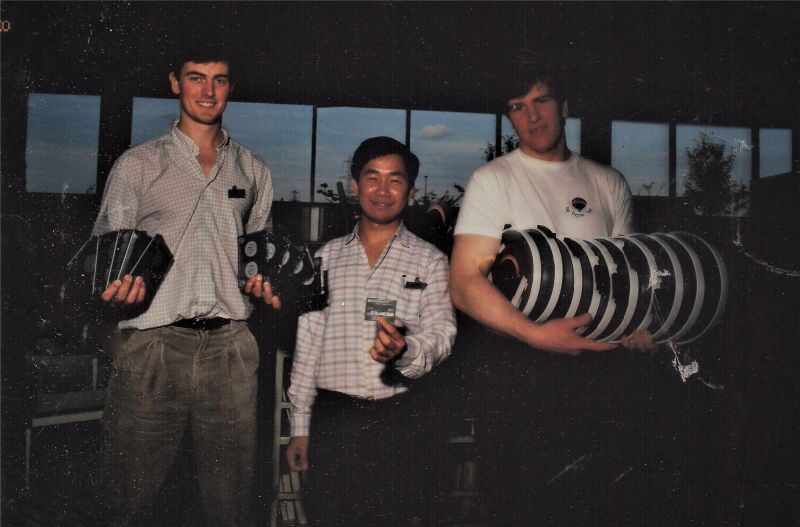
Like most things, it is fear of the unknown. As a leader, many of us have a natural tendency to feel we need to know the answers, correction, ALL the answers. That is actually our biggest weakness. We are fundamentally all managers: managers of expectations, of time, and of effort. As managers and leaders, it is about how we work with others and bring the best out of them. My big break came when I was appointed R&D Project Manager to lead a new project at HP Bristol. Until then, my experience had been in production systems (telecoms test equipment) and manufacturing engineering (disk drives). These areas, although advanced in their own right, are well understood and already developed by others. New product development is what every engineer dreams of doing. So when I was told I was to lead the (then) next generation storage system for HP, I was over the moon. Then reality hit home: err.. how? The immediate reaction was: can I pick another project and start with a less challenging project instead? Fortunately I didn’t. Leading the project means identifying what will be that next generation backup solution, selecting the right vendor and defining what the product would look like. This is not only about the external look of the box, but also what it does and how it is supposed to function. Initially it exposed me to the world of market research, meeting with the largest computer companies of the time like IBM, DEC, Wang and their customers to understand their needs. From there, we selected Sony’s Digital Audio Tape (DAT) technology to be adapted for computer applications. Along the way I also learnt Japanese, and led our US and US teams to work with Sony engineers in their Shibaura plant in Tokyo and how to eat my first sushi. The best part was everyone on the team participated and contributed to the best of their abilities and happy pushing the boundaries in the areas that they excel in – only with stress on how to do their very best. We worked hard and played hard. To cut a long story short, we introduced the DDS/DAT Storage System in 1989 and HP in Bristol generated over US$600 million revenue p.a. after 3 years; the second most successful industry-wide peripheral solution from HP (after printers). There had since been 7 generations of the technology, and still shipping today. I was worried I could not invent a new category of products from my background, but the team managed to. Together with Sony, we generated 26 patents from the project. And I got my name in one too. The lesson I want to share to the reader is to fully embrace your areas of weakness and fears. Managers do not have to have answers for everything. The leader is one who can identify the capabilities of the team. After that, just let each member do their best. 

The scariest thing in my career helped me grow the most Read More »

What’s the current version of yourself?

If we’ve crossed paths at any point in the last two decades, you’ve probably met at least one version of me. When I was still in the corporate world, a colleague called me a hippie because I loved quirky colourful clothes. I constantly wondered: Was I the problem? Or was the system just never built for creative minds like mine? When I left to freelance seven years later, I thought: Finally! I can be fully myself. That was Alex V1. Alex V2 came along just 8 years ago. I thought I needed an “upgrade”. As somebody’s life partner, in-law, and caregiver, I tried very hard to fit the “responsible adult” mould. I tried so hard that at some point, I lost sight of who I truly was. And paid the price of pretending to be someone I am not (I’ve written about anxiety and depression in other posts). Which brings me to Alex V3. The one I’m building now. These days – I wear what I want to meetings, even the colourful stuff. Because being “professional” doesn’t require erasing your creativity. – I say “no” respectfully and kindly, instead of saying yes to please others. Because being “respectful” doesn’t mean silencing your truth. – I try to be more open in voicing my thoughts even when they are not popular opinion. Because authenticity should be celebrated, not suppressed. If you’re reading this while twisting yourself out of shape to fit in, stop. The right people will adjust, accept, and love the real you. When did you realize you were trying to shrink yourself—and what helped you stop?

What’s the current version of yourself? Read More »