Innovation

Storage: The Unsung Hero of AI

 If compute is how AI thinks, storage is how AI remembers. I want to start this post with a simple thank you – to the executive team at SanDisk for inviting me to deliver a keynote at their annual i3 Summit in Batu Kawan. Illuminate. Innovate. Ignite. The warmth of the welcome, the curiosity in the room, and the openness to explore that continued into dinner at the Ship Campus reminded me why I enjoy these sessions so much. Smart people. Open minds. Great conversations. We often talk about AI in terms of compute.Sometimes networks.Occasionally power. Storage rarely gets the spotlight. Even though STORAGE is ABSOLUTELY CENTRAL to AI. AI doesn’t just compute.AI ingests, remembers, retrieves, replays, and learns over time. That makes storage the system of record for intelligence itself:✅ Training data at massive scale✅ High-speed access for inference✅ Persistent memory across edge, cloud and device✅ Reliability as models move from experiment to production Without fast, scalable, and intelligent storage, AI is simply a momentary flash (pun intended). What makes Sandisk particularly interesting is the full spectrum they offer. On one end, they are one of the most recognisable consumer storage brands in the world – products that almost everyone here has used, trusted, and carried in their pockets. On the other, they are deeply embedded in emerging growth domains:✅ Data-intensive AI workloads✅ Edge and embedded systems✅ Automotive and industrial platforms✅ Devices that now think, not just store This intersection – consumer trust, industrial reliability, and AI-driven demand – is where real opportunity lies. As AI architectures evolve, storage is no longer background capacity. Storage is now strategic infrastructure. The opportunity is now for SanDisk to help shape how data is:✴️ Positioned✴️ Moved✴️ Preserved✴️ And ultimately turned into intelligence I appreciate the opportunity to share my perspectives with the team, and for the discussions with the leaders of the business – Matt, Masaaki, Prasad, BS, Rama, Shrikar, Mei and Lau – who came together from the US, China, India, and Japan. Thoroughly encouraged by the depth of engagement I encountered through the day. And the possibilities open. A BIG THANK YOU to Nirbhaya Pathak and his team for the invitation and hospitality, and the conversations that made this far more than just another keynote. The future of AI won’t just be about compute. It will be stored, accessed, and remembered. And in an AI world obsessed with speed and scale, it’s worth knowing that intelligence only endures if it has somewhere reliable to live.

Storage: The Unsung Hero of AI Read More »

109 Chinese Car Brands?!

109 CHINESE CAR BRANDS?! WHAT???  When I first saw this chart, I had to double-check it. That’s one hundred and nine carmakers, all in one country! From “Luxury” down to “Low-cost.” (Thank you Reddit.) At first glance, it looks insane. Violates all business school strategy text books. Why would any government or industry allow this kind of fragmentation? Wouldn’t it be more efficient to focus on a few national champions? But that’s the paradox of China’s EV boom. Then again, perhaps it’s genius. “LET A THOUSAND FLOWERS BLOOM” It’s a phrase from old China, but it captures what’s happening now. The government didn’t try to pick winners. It simply let a thousand flowers bloom – allowing ideas, technologies, and business models to compete freely. Some flourished. Many will wither. But through this chaos, China has built the world’s most complete EV ecosystem – from batteries and semiconductors to software, motors, and charging networks. This approach compressed 30 years of industrial learning into a single decade. The results are shaking the world. German automakers – once untouchable in engineering and prestige – now find themselves outpaced in software, cost, and speed. Even Tesla’s cost advantage increasingly depends on its China-based supply chain. This isn’t just a price war. IT’S A CAPABILITY WAR. China’s crazy, chaotic, capitalistic model has produced competitors now storming global markets. WHAT HAPPENS NEXT? Most won’t survive. The pyramid will shrink. But the survivors? They’ll be battle-hardened, globally capable, and export-ready. In China, they call it “involution” (内卷 nèijuǎn) – a term originally describing the contraction of the uterus after childbirth, so the body can grow strong again. Exactly as evolution works in nature – only the best adapt and endure. Those who survive will redefine global automotive economics. LESSONS FOR MALAYSIA AND ASEAN There’s a clear takeaway for us – as Malaysia stands in the spotlight this week. We cannot choose our national champions, no matter how much our leaders might wish to. The market will decide. What governments can and must do is provide the ‘fertiliser’ for the ‘flowers’ to bloom – the policies, incentives, and ecosystem that help good ideas take root, grow, and flourish. Encourage experimentation. Invest in the ecosystem, people, and talent – not just assembly lines. Support batteries, materials, and chip design – the invisible backbone of the EV revolution. This applies not just to Malaysia, but to ASEAN as a whole. Real transformation will always look messy, competitive, and creative in its early stages. When you let a thousand flowers bloom, for sure, not all will survive. But those that do, will change the world. Does Malaysia just want to survive and make money? Or make a real impact within ASEAN? Original Linkedin post here. 

109 Chinese Car Brands?! Read More »

Learning the HP way in my first job

MY FIRST JOB WASN’T JUST ABOUT LEARNING TO BE AN ENGINEER – I also learnt how to be human at work. I had just graduated from Imperial College in 1980 and joined HP’s Telecoms Division at South Queensferry in Scotland – a small, dreary town by the Firth of Forth. As a group of young graduates, we were all put through an apprentice program that included “The HP Way”. This wasn’t your usual corporate onboarding – it was a complete philosophy of how to live, work, and lead. Around that same time, the book ‘In Search of Excellence’ came out – and HP was held up as one of the most admired and innovative companies in the world. Wow! For those of us who had just joined, that made us proud. We knew we had made the right decision. More importantly, it taught us that doing things the right way matters.These were the principles that defined Silicon Valley and became the DNA of icons like Intel Corporation, Apple, and Google. ~~ 🌿 The HP Way was built around five simple principles: 1️⃣ PROFIT is not the goal – it’s the result of doing the right things well.HP’s founders, Bill Hewlett and Dave Packard, believed the real purpose of business was to make a contribution. Focus on excellence, and profit would follow. 2️⃣ CUSTOMERS come first.We were taught to listen – to understand the customer’s problem deeply before offering a solution. It wasn’t just service. It was respect. 3️⃣ FIELD OF INTEREST – do only what you can do best.HP avoided chasing fads. That discipline allowed engineers to master their craft instead of running after every shiny trend. 4️⃣ GROWTH through opportunity, not just size.Growth meant creating space for people to learn, invent, and lead – not just expanding headcount or revenue for its own sake. 5️⃣ RESPECT for individuals.Everyone, from technician to VP, was treated with dignity. We had a culture called MBWA – “Management by Walking Around.”Managers didn’t hide in offices. They walked the floor, listened, and asked questions. They ‘turun padang’. When I moved to HP Labs in Palo Alto, those values still guided everything – from research to management. I practiced it myself. There, scientists and researchers were empowered to work with freedom and trust – the culture assumed you wanted to do the right thing. When Carly Fiorina became CEO in 1999, everything changed. 🔶 Targets replaced trust.🔶 Revenue replaced respect.🔶 Purpose became valuation and stock price. Within a year, many of us left – not because we stopped believing in HP, but because HP had stopped believing in The HP Way. ~~ I will always cherish those 20 years. They taught me how to manage people, technology, and business – the right way. Now, whenever I find a culture that values integrity, contribution, and respect, I try to practice a little of that HP Way again. And try to pass it on.

Learning the HP way in my first job Read More »

Move over LLM. Here comes SLM

LLMs ARE OVERRATED. FACTORIES NEED SLMs INSTEAD! When people hear “AI in manufacturing,” they think of massive LLMs, complicated deployments, and costs that only Big Tech can afford. But let’s start closer with something familiar. Take defect detection in your test and QA process. Every factory already collects huge amounts of data: Defect logs, yield reports, FA images. Collected. Collated. Categorised. The problem isn’t data. The problem is: 🌀 Too much of it (really hard to analyse to extract trends & patterns) 🌀 All static (we usually look only after issues happen) This is where AI comes in. SLMs, not LLMs. With simple data science: data analysis, data engineering, data visualisation. In other words, focused machine learning (ML) and developing models that: ✅ Spot anomalies in your test data before they happen ✅ Flag subtle trends and shifts in distributions that SPC charts might miss ✅ Correlate defect patterns across machines, lots, or even suppliers None of this requires massive hardware – or a billion dollar AI system. Most factories already have 80% of what’s needed: 👍 Historical test data (structured + unstructured) 👌 IT systems that store all this data 👨‍💻 Engineers who know the failure modes inside out What’s missing is probably just an additional layer: 👨‍🔬 Data analysts/engineers who can clean and prepare the data 🎉 Simple ML models trained to recognize patterns faster than the human eye Don’t know where to start? Here’s a high-level recipe: 1️⃣ PICK ONE AREA Start small. Defect detection is perfect because data is already available. 2️⃣ GATHER AND CLEAN THE DATA Consolidate your test logs, FA databases, and images. Focus on consistency. 3️⃣ APPLY THE RIGHT TOOL Use lightweight ML models (suggest open sources) to flag unusual patterns. 4️⃣ VALIDATE WITH EXPERTS The engineers need to confirm whether the AI’s flagged defects are real. 5️⃣ DEPLOY IN PARALLEL Run the model alongside your existing QA processes. Build confidence first before replacing anything. 6️⃣ SCALE GRADUALLY Once it works for one test stage, extend to others. Or move on to more sophisticated models – like predictive maintenance, process drift detection, or optimizing test times. ~~ The key point is: you don’t need to “import” AI into the factory. You already have it in the data. These models are just tools to unlock what’s been sitting around for years. AI in production isn’t about replacing people. It’s about giving engineers and managers sharper tools to anticipate problems, react faster, and prevent them before they happen. The question isn’t whether you can afford AI. The question is whether you can afford NOT to have AI on your shop floor. ~~ Need help getting started? Or more pointers? Get in touch. Start small, validate fast, and you’ll wonder why you didn’t begin sooner.

Move over LLM. Here comes SLM Read More »

The manager’s single most powerful tool

The performance appraisal is the manager’s single most powerful tool, but sadly it is also the least recognised one in his/her toolkit.  To many, the performance appraisal is a waste of time required by HR, to be gotten over with as quickly as possible so ‘we can go do more important work’. This attitude shows a lack of understanding of what the performance appraisal (PA) can do for the incumbent. Any manager can do this. When I was a young engineer of 26, I was promoted to be in charge of the HDD manufacturing engineering department when HP started up operations in Bristol. It would have been a steep learning curve to learn about hard disk drives in managing the 8 new people under my charge. I decided I needed to be the best manager for them instead.  This required understanding three non-technical areas: First is the business and what overall key performance metrics are. That is the reason for the business’s existence and continued survival. As a new factory, we needed to come online as soon as possible and generate revenue quickly. Second is responsibility of my department, how this fits in the overall whole, and its contribution to the key performance metrics of the division. Bringing up the production line smoothly and smoothly running afterwards is paramount. We need to work with production well and put processes in place quickly. Third, involves my direct reports. They already know what they are doing as they were there before me. What I had to do was to understand their roles, capabilities and ensure that all 8 of them cover everything my department is responsible for. Thereafter, I set monthly objectives for each of them and sat with each of them every two weeks to ensure we are on track and on schedule. We also used the meetings to realign responsibilities should there be unexpected issues to ensure they are covered in a timely manner. Feedback was provided there and then. As manager, my job is to coordinate that start-up problems are properly resolved. It allowed my team to do their job with ease and in so doing, achieve goals of the department and contribute to the business. When time came to do their performance appraisal it was a simple matter of pulling out our monthly achievements and formalizing them into the template provided by HR. Together, we made the annual PA into a continuous process and incorporated time to provide guidance, give feedback and allow individual growth. Performance appraisal is the fundamental method that we as leaders recognize that people are our most important resource.  Rewarding them properly is a consequence of this activity.

The manager’s single most powerful tool Read More »

Do you feel guilty using AI?

Do you feel guilty using AI? Some weeks back, I asked AI to generate a profile picture for my cooking channel. Chat Gpt generated the image based on this prompt: “Using this photo of me, can you help me create a profile photo for Instagram and YouTube along the lines of “Genie in a Kitchen” – I.e. use my real head and replace my body with a genie in the bottle kind of concept? I am holding a kitchen knife (to show that this is a cooking channel).” Shortly after I uploaded the image, a writer friend warned me it might spark backlash. Her friends pointed out it looked like stolen Studio Ghibli art and I would risk getting hate comments or lose subscribers. I told her the truth. Yes, I DID create it using AI, channelling Ghibli’s whimsical style. After my chat with my writer friend, the moral dilemma nagged at me. Should I reject AI, or harness its potential without guilt? As a writer, I admit I initially resented tools like ChatGPT for threatening my livelihood. But as someone who has always sucked at art, AI was liberating. It actualised my imagination with professional-grade execution in just a few minutes! After 3 days, I changed the profile pic to my real photo. AI can mimic style, but not soul. My followers connected with me – the human cook, not the fantasy genie. As my friend said: “We like the real you … Not the cartoon one.” Innovation has always disrupted art. From photography to digital brushes. You can’t stop the AI juggernaut. Like it or not, AI is penetrating every aspect of life. Every creator must choose to fear the wave, or ride it. I stand by my belief that AI is transformative. So yes, we should AI. But never at the cost of who we really are.

Do you feel guilty using AI? Read More »

Connecting the dots backwards

Technology may look like it can solve the problem, but transformation is not driven by tech alone.  Let me share about the product that never made it out the door because of that. Even before we heard about IR4.0, the researchers at Hewlett Packard Labs already created the concept of an electronic clipboard to capture what was on forms for processing online. The year was 1998. The thinking was how much easier it would be if data entry which was then handwritten on duplicate forms (sometimes triplicate) did not need to be retyped to be entered into computers. Recognition software would convert the handwriting on the clipboard captured directly as the service advisor was writing on the form. Data entry would be immediate. Service time will improve. Doctors can still write the way they like and retraining on clumsy computers was not needed. The industry will be revolutionised. With full support of then HP CEO Lew Platt, a division in HP absorbed the HPLabs team led by Polly Siegel to pivot to this new business plan, codenamed ‘PaperClip’ [pix]. The plan was not to replace paper forms, but to augment them. We will allow users to continue to do what they do best: focus on their trade and continue to capture the data on the clipboard such as personal details, service data, payment info and so on. Except this new clipboard will also be battery powered. Extreme care was taken to ensure it was intuitive to use and carry in rugged conditions, and could capture handwriting through a stack of forms placed on it. The industrial design for the product even won acclaim for IDEO, the design house engaged for the project. We partnered with the country’s largest forms producer and distributor, The Reynolds and Reynolds Company, to identify early adopters to pilot the product. Their forms are used everywhere in the USA, and will be our launch partner. It was potentially a billion dollar business, or perhaps more. But alas, technology alone is not enough. It is really hard to compete against a $2 clipboard you can buy from any stationery store. The irony today is the devices replacing the $2 clipboard are electronic handheld devices not unlike the smartphone costing many times that of PaperClip. And companies buy them without hesitation. Flatscreens are everywhere, and at doctor’s offices many struggle to do data entry as it is still their job to do so. The Reynolds and Reynolds company today is also providing retail software management systems, along with the forms that they are known for. The lesson from all this: technology alone cannot drive transformation. Users and ecosystems have to align. And the timing has to be right. We can’t connect the dots looking forward. We just have to be smarter going forward.

Connecting the dots backwards Read More »

The scariest thing in my career helped me grow the most

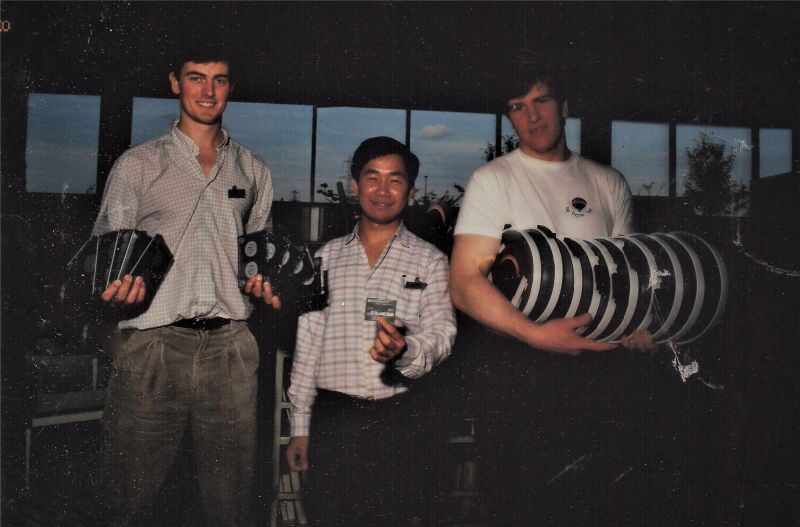
Like most things, it is fear of the unknown. As a leader, many of us have a natural tendency to feel we need to know the answers, correction, ALL the answers. That is actually our biggest weakness. We are fundamentally all managers: managers of expectations, of time, and of effort. As managers and leaders, it is about how we work with others and bring the best out of them. My big break came when I was appointed R&D Project Manager to lead a new project at HP Bristol. Until then, my experience had been in production systems (telecoms test equipment) and manufacturing engineering (disk drives). These areas, although advanced in their own right, are well understood and already developed by others. New product development is what every engineer dreams of doing. So when I was told I was to lead the (then) next generation storage system for HP, I was over the moon. Then reality hit home: err.. how? The immediate reaction was: can I pick another project and start with a less challenging project instead? Fortunately I didn’t. Leading the project means identifying what will be that next generation backup solution, selecting the right vendor and defining what the product would look like. This is not only about the external look of the box, but also what it does and how it is supposed to function. Initially it exposed me to the world of market research, meeting with the largest computer companies of the time like IBM, DEC, Wang and their customers to understand their needs. From there, we selected Sony’s Digital Audio Tape (DAT) technology to be adapted for computer applications. Along the way I also learnt Japanese, and led our US and US teams to work with Sony engineers in their Shibaura plant in Tokyo and how to eat my first sushi. The best part was everyone on the team participated and contributed to the best of their abilities and happy pushing the boundaries in the areas that they excel in – only with stress on how to do their very best. We worked hard and played hard. To cut a long story short, we introduced the DDS/DAT Storage System in 1989 and HP in Bristol generated over US$600 million revenue p.a. after 3 years; the second most successful industry-wide peripheral solution from HP (after printers). There had since been 7 generations of the technology, and still shipping today. I was worried I could not invent a new category of products from my background, but the team managed to. Together with Sony, we generated 26 patents from the project. And I got my name in one too. The lesson I want to share to the reader is to fully embrace your areas of weakness and fears. Managers do not have to have answers for everything. The leader is one who can identify the capabilities of the team. After that, just let each member do their best. 

The scariest thing in my career helped me grow the most Read More »

Panel Discussion: Intelligent Manufacturing KL 2025

What an inspiring panel discussion @Intelligent Manufacturing KL!  We all know leadership is critical in talent development – but after moderating this panel, I realized there’s someone even more important: you. Yes, YOU. While organizations play a role, your growth – your talent development – is ultimately your responsibility. This hit home after witnessing another powerful discussion in Penang recently, brilliantly articulated by Masliza Mansor. [read it here https://lnkd.in/g_HPUEpf] It is universally recognised that we are now finding it harder to get talent, not just good talent. The reasons: 1️⃣ The world is changing faster than ever. 2️⃣ Talent isn’t just scarce – it’s evolving. Companies everywhere are struggling to attract and retain their best people. Why? Three seismic shifts: ⚡TECHNOLOGY: AI, automation, and robotics aren’t just tools – they’re redefining what it means to be competitive. ⚡GEO-POLITICS: New alliances, tariffs, and trade dynamics force businesses to adapt just to stay competitive. ⚡WORKFORCE EXPECTATIONS: Gen Z and Alpha aren’t just looking for jobs – they’re demanding purpose, culture, and growth. A good salary? That’s just a start. BIG NAME companies – especially well-known multinationals – can easily get the best talent. Every graduate has heard of them, their successes.  And of course, their salaries. MNCs have long leveraged their reputation to attract top talent. So what’s the answer? COMPANIES need to let potential employees know what the company – especially local ones – represent.  What the company does, what’s the company culture, and (then) how their salaries are competitive. Don’t just rely on AI. Or your marketing department – that’s to reach out to customers about your products. You want to attract talent to work for you. Use human intelligence – listen, inspire, and create workplaces where people feel valued. Culture, vision, and growth opportunities matter more than ever. FOR INDIVIDUALS: The panel flipped the script. YOU are your own leader. YOUR  communication, curiosity, and adaptability determine your success, your next job. 👍 Speak up with clarity and respect.👍 Keep learning – the world won’t wait for you.👍 Own your development like your career depends on it (because it does). The best talent isn’t just found – it’s built. IT STARTS WITH YOU. Intelligent manufacturing isn’t just about machines – it’s about people. Thank you to the incredible panelists SookLing Teh, Jaszmine K.B., Oscar Low, WANG Xin, Pratibha Kurnool.  What an enlightening discussion. A big thank you also to Fiona Chiew for the invitation to Intelligent Manufacturing – IMKL Let’s bring this conversation to Penang next!

Panel Discussion: Intelligent Manufacturing KL 2025 Read More »

Does your Linkedin profile need to be perfect before launching?

Does your LinkedIn profile need to be perfect before you start engaging? Take it from someone who has changed her Linkedin profile 289780 times. NO. My last tagline was “Change the world, one story at a time”. I loved it. After all, it’s authentic and reflects what I want to do. 𝖠̲𝗇̲𝖽̲ ̲𝗍̲𝗁̲𝖺̲𝗍̲ ̲𝗐̲𝖺̲𝗌̲ ̲𝗍̲𝗁̲𝖾̲ ̲𝗍̲𝗋̲𝗈̲𝗎̲𝖻̲𝗅̲𝖾̲ ̲𝗐̲𝗂̲𝗍̲𝗁̲ ̲𝗆̲𝗒̲ ̲𝗍̲𝖺̲𝗀̲𝗅̲𝗂̲𝗇̲𝖾̲ It was what *I* wanted. 𝘕𝘰𝘵 𝘸𝘩𝘢𝘵 𝘮𝘺 𝘱𝘰𝘵𝘦𝘯𝘵𝘪𝘢𝘭 𝘤𝘭𝘪𝘦𝘯𝘵𝘴 𝘸𝘢𝘯𝘵𝘦𝘥. Still, I was very attached to it and refused to change it. Until Linette Heng triggered me. On one of her trips to Penang, we were hanging out for ice-cream when I finally plucked up the courage to ask her. “𝗪𝗵𝗮𝘁 𝗰𝗮𝗻 𝗜 𝗱𝗼 𝘁𝗼 𝗯𝗼𝗼𝘀𝘁 𝗺𝘆 𝗟𝗶𝗻𝗸𝗲𝗱𝗶𝗻 𝗳𝗼𝗹𝗹𝗼𝘄𝗲𝗿𝘀? 𝗜𝘁’𝘀 𝗯𝗲𝗲𝗻 𝘀𝘁𝗮𝗴𝗻𝗮𝘁𝗶𝗻𝗴 𝗳𝗼𝗿 𝗮 𝘆𝗲𝗮𝗿?” She was kind, but she didn’t mince her words. It took only 5 minutes for me to get the message. (She’s just that sharp as a people reader. Hire her as a life coach, folks. Although I can only afford home-cooked meals for now). In a nutshell, she told me to see how other Linkedinfluencers did it. My ego took a bit of a knock. After all, I’m supposed to be a writer. But I really wanted to improve, so I swallowed my pride and spent the evening stalking other Linkedinfluencers. It was eye-opening. The answer came to me in the shower. “𝗥𝗮𝘄 𝘀𝘁𝗼𝗿𝗶𝗲𝘀 𝗮𝗯𝗼𝘂𝘁 𝘀𝘁𝗮𝘆𝗶𝗻𝗴 𝗵𝘂𝗺𝗮𝗻 𝗶𝗻 𝘁𝗵𝗲 𝗮𝗴𝗲 𝗼𝗳 𝗔𝗜.” Did it work? Well, in the last one month, I’ve gained more connections than the last two years combined. And even received some direct compliments about my new tagline. Oh and one other tip from Linette? Change my photo. I did, from one with eyes looking down, to one where I smile directly into the camera. So that I look less fierce and more approachable lah. So, back to my question: should you show up on Linkedin when your profile isn’t perfect? Absolutely. Go ahead and “beautify” your Linkedin profile a little if it’s too raw. But don’t take too long and overthink. Because perfectionism doesn’t deliver results. Progress does.

Does your Linkedin profile need to be perfect before launching? Read More »